
Breast implant reverse surgery: a step-by-step approach
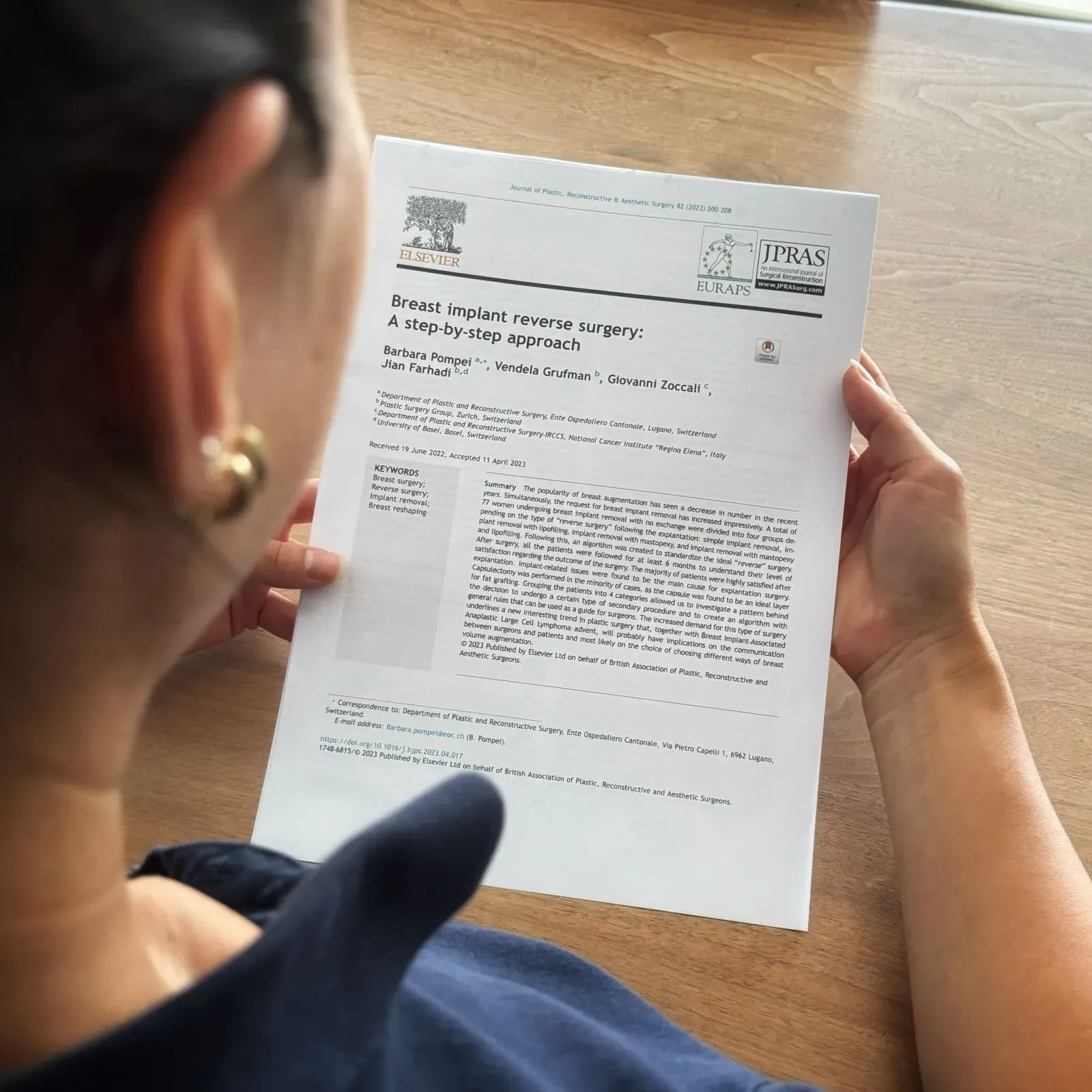
We are pleased to present the latest scientific publication from our specialists in plastic surgery.
In recent years, the popularity of breast augmentation has declined, while demand for breast implant removal has risen significantly. For this reason, we conducted a study involving 77 women who underwent implant removal without reinsertion of a new prosthesis. These patients were divided into four groups according to the type of “breast restoration” following explantation: simple implant removal without reconstruction, implant removal with autologous fat transfer (lipofilling), implant removal with mastopexy, and implant removal with mastopexy combined with lipofilling.
Our aim was to develop an algorithm for implant removal in order to standardise the ideal approach to these procedures. After surgery, all patients were followed up for at least six months and asked about their level of satisfaction. The majority reported being highly satisfied after explantation. The main reason for implant removal was complications related to the prostheses. Capsulectomies were performed only in a few cases, as the capsule proved to be a suitable layer for autologous fat transfer. By categorising patients into four groups, we were able to identify patterns in the choice of secondary procedures and establish a general algorithm to serve as a guide for surgical planning.
The growing demand for such operations, together with emerging concerns about breast implant-associated anaplastic large cell lymphoma, highlights a shift in trends within plastic surgery. This development is expected to influence communication between surgeons and patients, as well as the choice of future methods of breast augmentation.