
Tummy tuck
The key facts
|
|
|
|
|
When is a tummy tuck the right choice?
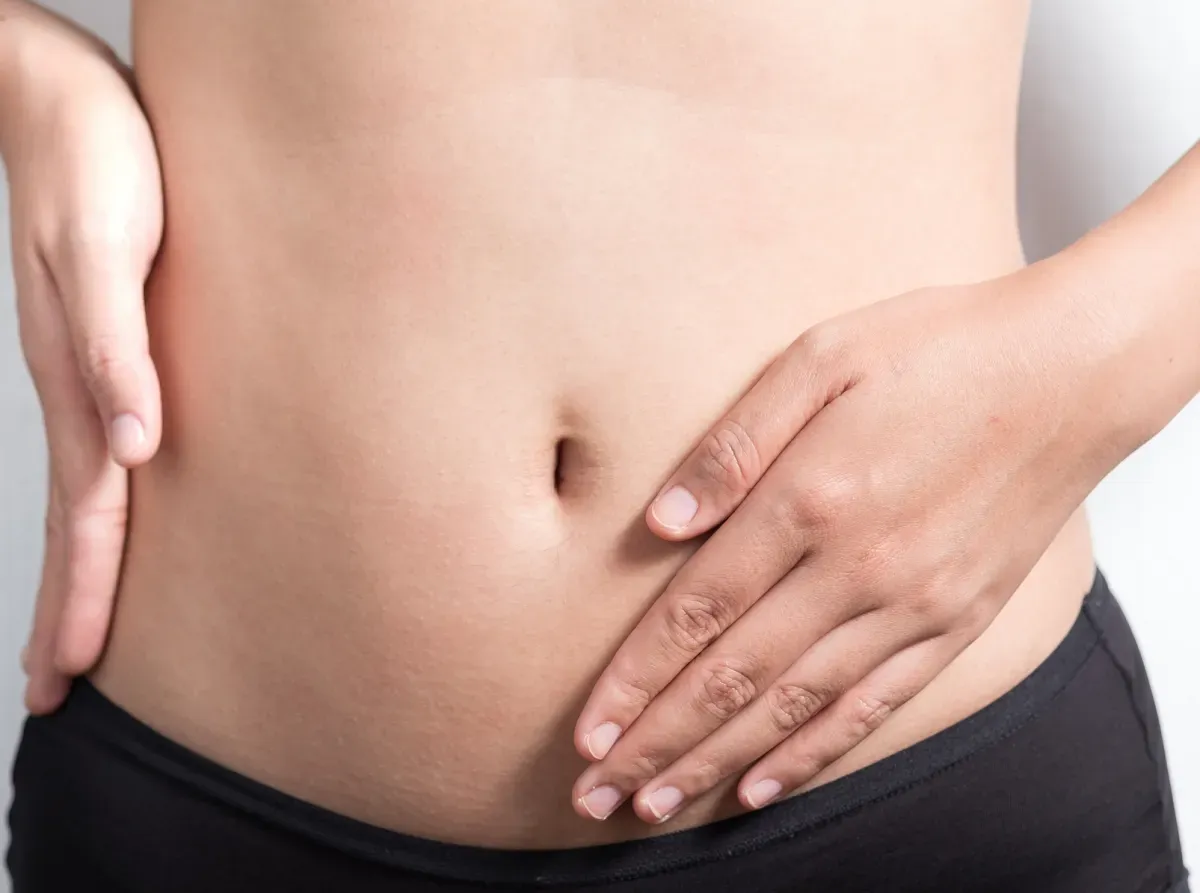
After pregnancy or significant weight loss (massive weight loss, bariatric surgery), the stretched abdominal muscles often cannot fully recover. The abdominal wall bulges forward and excess skin hangs down. In many cases, exercise alone does not bring about a noticeable improvement in the shape of the abdomen – neither at the front or at the back.
About the treatment
In a tummy tuck (abdominoplasty), excess skin below the navel is removed and, at the same time, the abdominal muscles are tightened in cases of rectus diastasis (separation of the abdominal muscles) and returned to their original position. If the patient has an umbilical hernia, this can also be corrected during the same operation.
If necessary, the navel is detached and reattached after the tightening procedure. The stitches are located above the mons pubis and are therefore not visible, even in swimwear.
The procedure can be easily combined with liposuction in the abdomen and other areas of the body. In cases of significant excess skin, for example after massive weight loss, it is often advisable to tighten more of the abdomen, flanks and back (known as belt lipectomy or lower body lift) in order to achieve a harmonious overall appearance.
In the abdominal area, this procedure is very similar to a tummy tuck, with the difference being that the incision is made in a belt-like shape around the entire circumference of the body. This allows for excess skin to be removed from all sides, leaving a scar that can be easily concealed under the waistband of trousers.
The procedure leaves a large wound surface area, so this operation should always be performed on an inpatient basis.
This is precisely where the mummy makeover comes in – a combined procedure that is specially tailored to the needs of young mothers.
Typical areas of application
- As a corrective procedure for excess skin and sagging after pregnancy or significant weight loss
- To tighten abdominal muscles in cases of rectus diastasis
When is it recommended?
- In cases of visible excess skin and a protruding abdominal wall that cannot be improved through exercise
- In cases where there is also an umbilical hernia or a desire to combine with liposuction
- In cases of massive weight loss or after bariatric surgery
“My aim is to offer personalised treatment and to restore and optimise the aesthetic appearance of physical changes that occur as a result of everyday life and ageing. Achieving a natural look is our top priority."
FAQs
When does the procedure have to be combined with liposuction?
A combination is advisable if, in addition to excess skin, there are also fat deposits on the abdomen or other parts of the body that do not disappear through exercise. This allows the result to be aesthetically optimised.
What happens to the navel?
The navel is usually detached during a tummy tuck and repositioned in a natural location after the skin has been tightened, so that it remains as visibly unchanged as possible.
How long after the operation should I refrain from sporting activities?
As a rule, you should refrain from intensive sporting activities for 6 to 8 weeks so as not to impair healing and to avoid complications.
Can I lose weight through a tummy tuck?
A tummy tuck is not a method of weight loss. The aim of the procedure is to remove excess skin and tighten the abdominal muscles – not to reduce fat on a large scale. Weight loss should therefore ideally take place before the operation in order to achieve the best possible result.

Booking options
