
Benign skin changes
The key facts
|
|
|
|
|
Surgical removal of benign skin changes
Trust us with your skin. In close cooperation with external dermatologists, we offer you careful, individual plastic surgery treatment for skin changes.
Even benign skin lesions such as moles, lipomas, cysts or xanthelasmas can have an aesthetic or functional impact – targeted treatment or surgical removal often provides a quick remedy. In such cases, we offer targeted, gentle and effective removal – often on an outpatient basis and under local anaesthetic.
Benefit from our many years of experience in the field of cosmetic and surgical treatment of skin changes – for healthy skin and a new quality of life.
The most common benign skin changes
Benign skin changes such as moles, lipomas, cysts, xanthelasmas or hidradenitis suppurativa occur frequently and can cause both aesthetic and functional issues. Depending on the type, location and symptoms, we offer targeted, gentle treatment methods – from preventive removal to surgical therapy for chronic or inflammatory skin changes.
Moles (naevi)
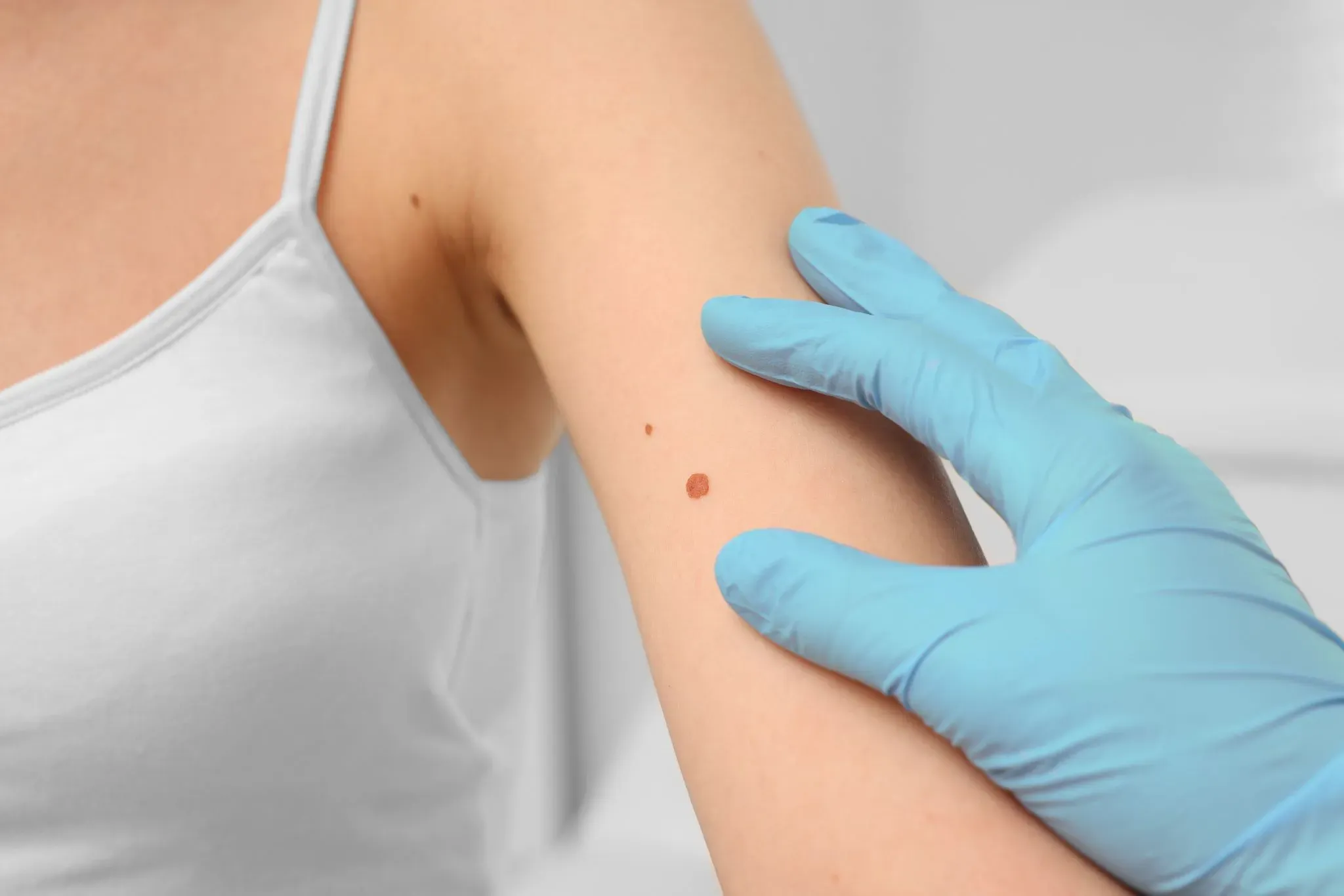
Moles are benign pigment-forming cell clusters that can vary in colour, shape or size. Changes may indicate malignant developments. Regular dermatological check-ups are an important part of skin cancer prevention, especially if you have many moles.
Lipomas
Lipomas are benign accumulations of fatty tissue that grow slowly over many years. They are usually harmless, but can be unattractive or painful. In such cases, surgical removal is advisable. Rapidly growing or painful tissue should be examined promptly – we provide expert support throughout the diagnosis and treatment process.
Cysts
Cysts are caused by a blocked sebaceous gland and mainly occur on the head, neck or back. They appear as firm, usually painless lumps. Under local anaesthetic, we remove the cyst along with its capsule to prevent recurrence. Inflamed cysts are treated in two stages: First, the pus is drained, then it is removed completely.
Xanthelasmas
Xanthelasmas are yellowish, clearly defined deposits of fat or cholesterol in the skin, usually on the inner eyelids. They are often a sign of a lipid metabolism disorder, so it is advisable to seek medical advice.
Xanthelasmas do not cause any discomfort, but they do not disappear by themselves and do not respond to medication. We provide tailored advice on suitable treatment options – including for conditions causing distress for reasons of aesthetics.
Hidradenitis suppurativa
Hidradenitis suppurativa is a chronic inflammatory disease of the hair follicles, particularly in the armpits, groin area or genital region. If drug therapies are ineffective, surgical treatment is indicated. Depending on the severity, individual areas of inflammation or whole areas of affected skin are removed in a targeted manner.
"From diagnosis to surgical intervention to scar treatment—we handle everything under one roof."
FAQs
Do all larger moles need to be removed?
No, not all large moles need to be removed. The decisive factor is not primarily the size, but rather whether the mole has changed noticeably (e.g. in colour, shape, outline or texture) or is causing any discomfort. Nevertheless, large moles should be checked regularly by a dermatologist – especially if there is a family history of skin cancer.
Is it necessary to fully remove an atypical mole, or is it sufficient to take a sample?
That depends on the assessment findings. In many cases, the entire mole is removed (excision) in order to make a clear diagnosis and to fully diagnose any possible malignant changes. A partial sample (biopsy) may be useful in certain cases, e.g. for initial clarification or in the case of very large lesions – the decision is made on an individual basis in consultation with the dermatologist or surgeon.
Who examines the tissue that has been removed?
The tissue sample is routinely examined under a microscope by a specialist in pathology. This involves assessing whether the skin change is benign or malignant and whether the affected area has been completely removed. The histological analysis provides the basis for further therapeutic measures.
Are the follow-up checks carried out by the plastic surgeon or the dermatologist?
Early wound checks and subsequent checks to assess the aesthetic result and the scar are undertaken by the plastic surgeon. Regular checks of any remaining moles are performed by the dermatologist.
Can lipomas also be removed by liposuction?
Yes, in some cases, a lipoma can be removed by liposuction (fat removal), especially if it is a soft and clearly defined accumulation of fatty tissue. However, not every lipoma can be completely removed in this way, as the capsule of the lipoma is left behind, meaning a risk of recurrence. Surgical removal is often the more reliable method, especially for larger lipomas or those that are firm to the touch.
Is lipoma removal covered by health insurance?
Whether or not the health insurance company will cover the costs depends on the individual case. If the lipoma is causing functional problems (e.g. restricted movement or pain) or poses a health risk, the health insurance fund will usually cover the cost of treatment. If the removal is undertaken for aesthetic reasons only, it is not usually covered by health insurance and the patient is required to cover the cost themselves.
What can I do to prevent new lipomas from forming?
Lipomas are usually genetic, so there is no guaranteed method to completely prevent them from forming again. You can help to minimise the risk by pursuing a healthy lifestyle with a balanced diet, getting plenty of exercise and avoiding obesity. If lipomas multiply or change rapidly, regular medical check-ups are advisable.
Is hidradenitis suppurativa curable?
Hidradenitis suppurativa is a chronic inflammatory skin condition for which there is not yet a complete cure. However, with individually tailored treatment, symptoms can be significantly alleviated, flare-ups reduced and quality of life improved. Risk factors such as smoking or excess weight should be reduced.
After surgery, will inflammation in the affected area cease?
Surgery can significantly reduce or completely remove the inflammatory lesions, but it does not cure the condition completely. Further inflammation may occur after the procedure, which is why aftercare and, if necessary, further treatment are important.
What does "open wound treatment" mean?
In open wound treatment, the surgical wound is not closed immediately, but is instead left open to allow for better healing and to prevent infection. The wound is regularly cleaned and dressed until it heals by itself. This calls for patience, but often gets good results.

Booking options
