
Malignant skin changes
The key facts
|
|
|
|
|
Why early treatment is so important for skin cancer
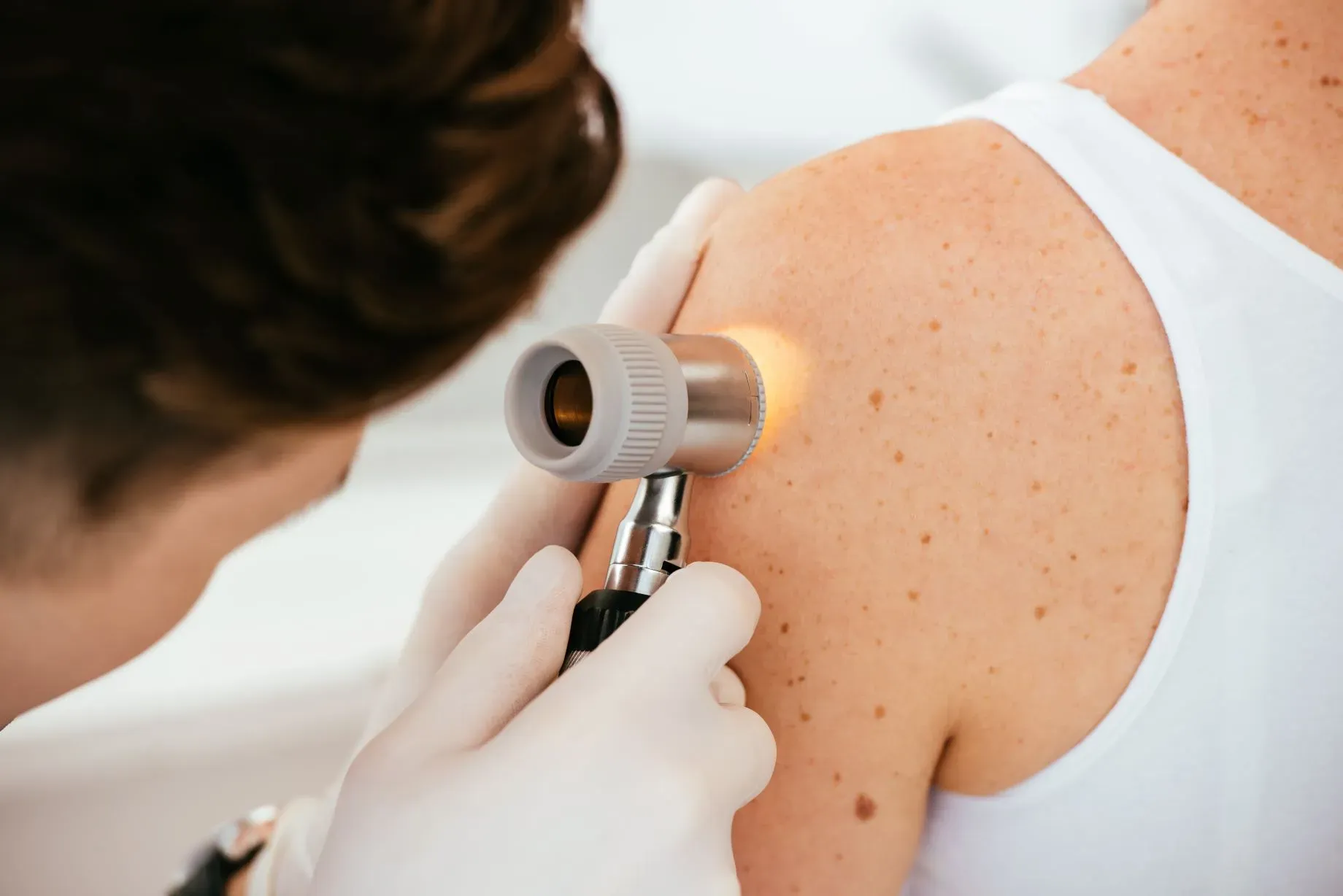
The sooner skin cancer is detected and treated, the better the chances of recovery and the lower the risk of complications. You can rely on our many years of experience and close cooperation with dermatological and histological specialists to ensure the best possible care for your skin.
The most common malignant changes
Skin changes that cannot be ruled out as malignant by clinical assessment should be surgically removed. Once removed, the tissue is processed at our partner histology institute so that further treatment can be determined after diagnosis.
Don't delay – show us the skin changes that are causing you or your dermatologist concern.
Non-melanoma skin cancer – basal cell carcinoma (BCC) and squamous cell carcinoma (SCC)
Non-melanoma skin cancer includes basal cell carcinoma and squamous cell carcinoma. Particularly in the case of unexplained, non-pigmented skin changes, it is essential to take a tissue sample under local anaesthetic. If a diagnosis is confirmed, the entire lesion must be removed, together with a “safety margin” of surrounding tissue. Squamous cell carcinoma mainly occurs in areas exposed to the sun, such as the face, neck, hands or forearms. Compared with basal cell carcinoma, it grows faster and can affect deeper layers of the skin.
Depending on the size and location, the operation may require several sessions under local anaesthetic. The closure of the wound is planned on a case-by-case basis – ranging from primary closure to advancement flaps to tissue transfers from elsewhere on the body. Our experienced surgeons select the best method for optimal results.
Malignant melanoma skin cancer
Malignant melanoma is the most dangerous form of skin cancer. However, if detected early, the chances of recovery are very good. Regular checks of moles and skin changes by specialist dermatologists are the most effective form of prevention.
Any suspicious changes in the skin are completely removed and the wound is carefully closed. If the suspicion of melanoma is confirmed, a follow-up operation is performed to remove a safety margin of 1 to 2 cm, depending on the histological findings.
The follow-up operation can usually be performed under local anaesthetic, provided that no sentinel lymph nodes need to be removed. If this is necessary, the procedure is performed under general anaesthetic.
"From diagnosis to surgical intervention to scar treatment—we handle everything under one roof."
FAQs
Do I have to go to a general hospital for treatment of malignant melanoma skin cancer?
No, treatment can also be carried out in specialist practices or clinics that have experience in treating skin cancer. In complex cases or when follow-up procedures are required, it is advisable to consult a general hospital.
What is the risk of metastases developing in cases of malignant melanoma skin cancer?
The risk varies depending on the stage of the melanoma at the time of diagnosis. Melanomas detected at an early stage have a low risk of metastasis. The risk is significantly higher in advanced tumours.
Can another melanoma develop after a melanoma has been cured?
Yes, the risk of developing another melanoma is increased. Regular skin checks are therefore particularly important in order to detect any new changes at an early stage.
Can non-melanoma skin cancer spread?
With basal cell carcinoma, the risk is very low, whereas squamous cell carcinoma carries a low to moderate risk of spreading (metastasis), especially if treatment is delayed.
Are there alternatives to surgery?
Yes, depending on the location and size, other treatments such as cryotherapy (freezing), laser therapy or local medication may also be used. However, surgery remains the most reliable method for complete removal.
The skin change I’ve found is very small. Would it be better to wait before starting treatment?
No, even small malignant skin changes should be treated early to prevent growth, tissue destruction and complications.
Who checks the skin once non-melanoma skin cancer has been successfully treated?
Aftercare is usually provided by dermatologists. Regular check-ups help to detect recurrence at an early stage and monitor further skin changes.

Booking options
