
Breast reconstruction with silicone implants
The key facts
|
|
|
|
|
About the treatment
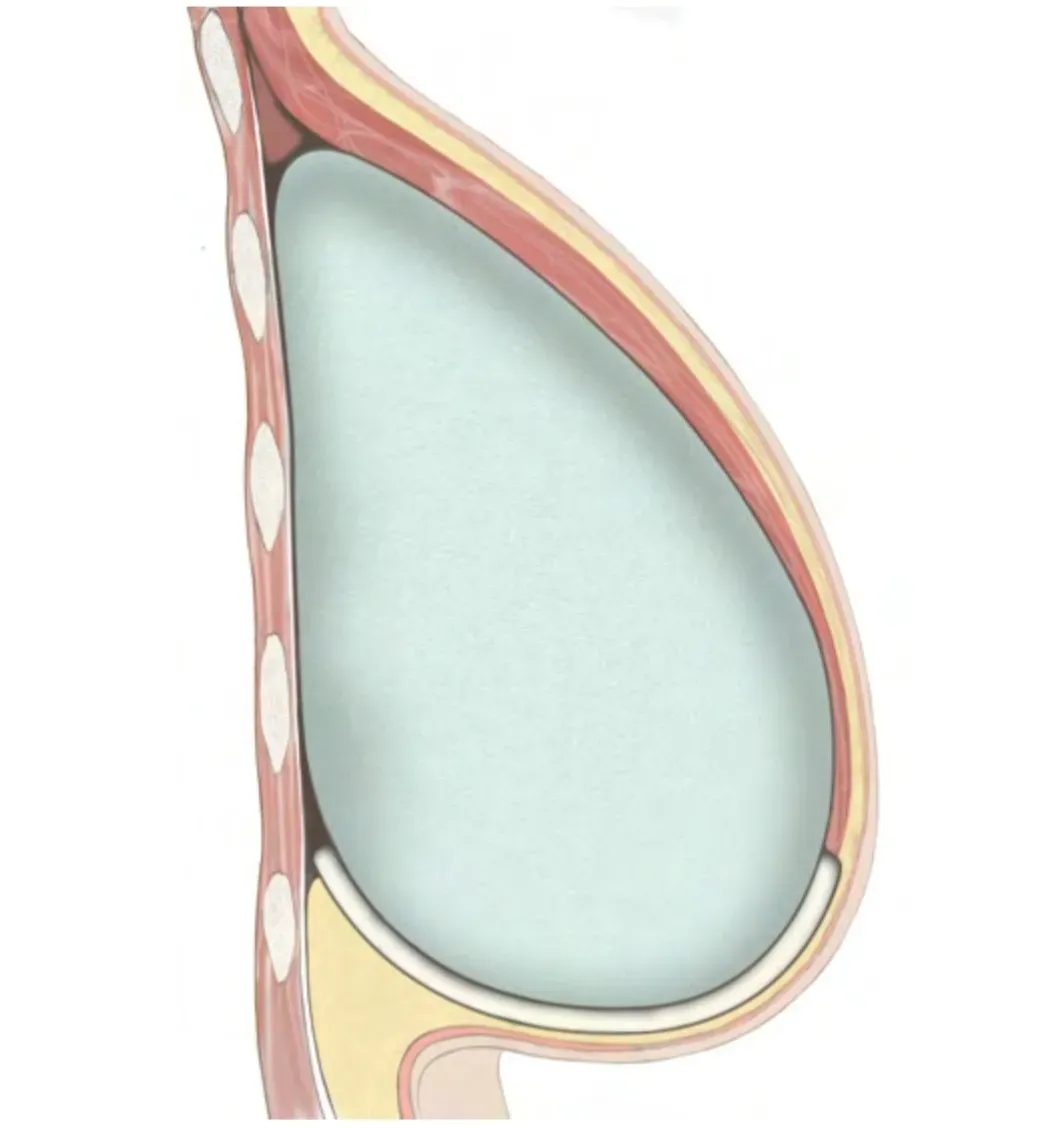
A common method of reforming the breast after mastectomy is reconstruction with silicone implants. In most cases, the first step is to insert what is known as an expander during the mastectomy. This serves as a spacer so that the breast skin can heal after the mammary gland has been removed. After a recovery period, the final silicone implant is inserted in a second procedure.
In some cases, the final implant can be inserted during the initial procedure. We then use a special surgical mesh to position and support the implant properly. This ensures that the prosthesis fits securely and looks more natural.
Regardless of whether an expander or an implant is used, reconstruction is usually performed on the chest muscle (prepectoral).
Before the operation, we will discuss with you in detail the size of the implant, and you will be able to see and feel a model. The incision is often made where there is already a scar or in the crease under the breast – ideally, this means that no new visible scars will be created.
If your breasts are rather saggy or large before the operation, it may be advisable to tighten the skin slightly. Sometimes we do this prior to the mastectomy so that everything heals better.
Typical areas of application
- Following a breast removal (mastectomy) due to breast cancer or an increased genetic risk
- Immediately following breast removal (primary reconstruction) to avoid feelings of loss
- At a later stage after mastectomy surgery (secondary reconstruction), e.g. if other treatments are to be completed first
- In cases of breast malformation (e.g. Poland syndrome) or severe breast asymmetry
- After complications with a previous implant (e.g. capsular contracture)
- When reconstruction of the female silhouette is desired, particularly for psychological or aesthetic reasons
When is it recommended?
- Immediate reconstruction:
- When no radiotherapy treatment is planned
- Patient in good general health
- Patient wishes to wake up from surgery with breasts
- Delayed reconstruction:
- Patient has radiotherapy or chemotherapy planned
- Patient has health-related limitations on physical strength
- Decision for later reconstruction
- Reconstruction using the patient's own tissue:
- After radiotherapy
- Patient wishes to have natural results
- Sufficient tissue available on patient’s body
- Reconstruction with implants:
- Little tissue available on patient’s body
- Shorter operation and faster recovery preferred
- Patient prefers a planned volume
"Every woman undergoing breast reconstruction deserves to have individualised and natural results – my goal is to fulfil this wish."
FAQs
What will my breast(s) feel like afterwards?
After the operation, the reconstructed breast usually feels different from a natural breast. The implant is firm and less mobile, and the skin may feel tight. With an expander, the breast is significantly smaller immediately after the operation than it was before. Since the expander is filled with saline solution, the breast feels softer and there are usually lumps on the skin.
It takes time for the body to get used to the new breast. Sensation in the new breast is usually limited following removal of the mammary gland. In some patients, sensation returns, while in others the breast remains numb.
When can I return to my normal daily routine?
Many patients can slowly resume their daily activities after just one or two weeks. Patients must not lift objects weighing more than approx. 5 kg for 6 weeks after the procedure. You should also avoid sports and heavy physical work for 6 to 8 weeks to ensure that everything heals properly.
Can the implant break?
Yes, an implant can be damaged, for example by strong pressure or injury. However, modern implants are very robust. Good aftercare is very important.
Does the implant impact on the oncological follow-up check?
No, regular examinations and check-ups for breast cancer aftercare are still possible with implants. Ultrasound, mammograms and MRI scans can still be used to detect changes at an early stage.

Booking options
