
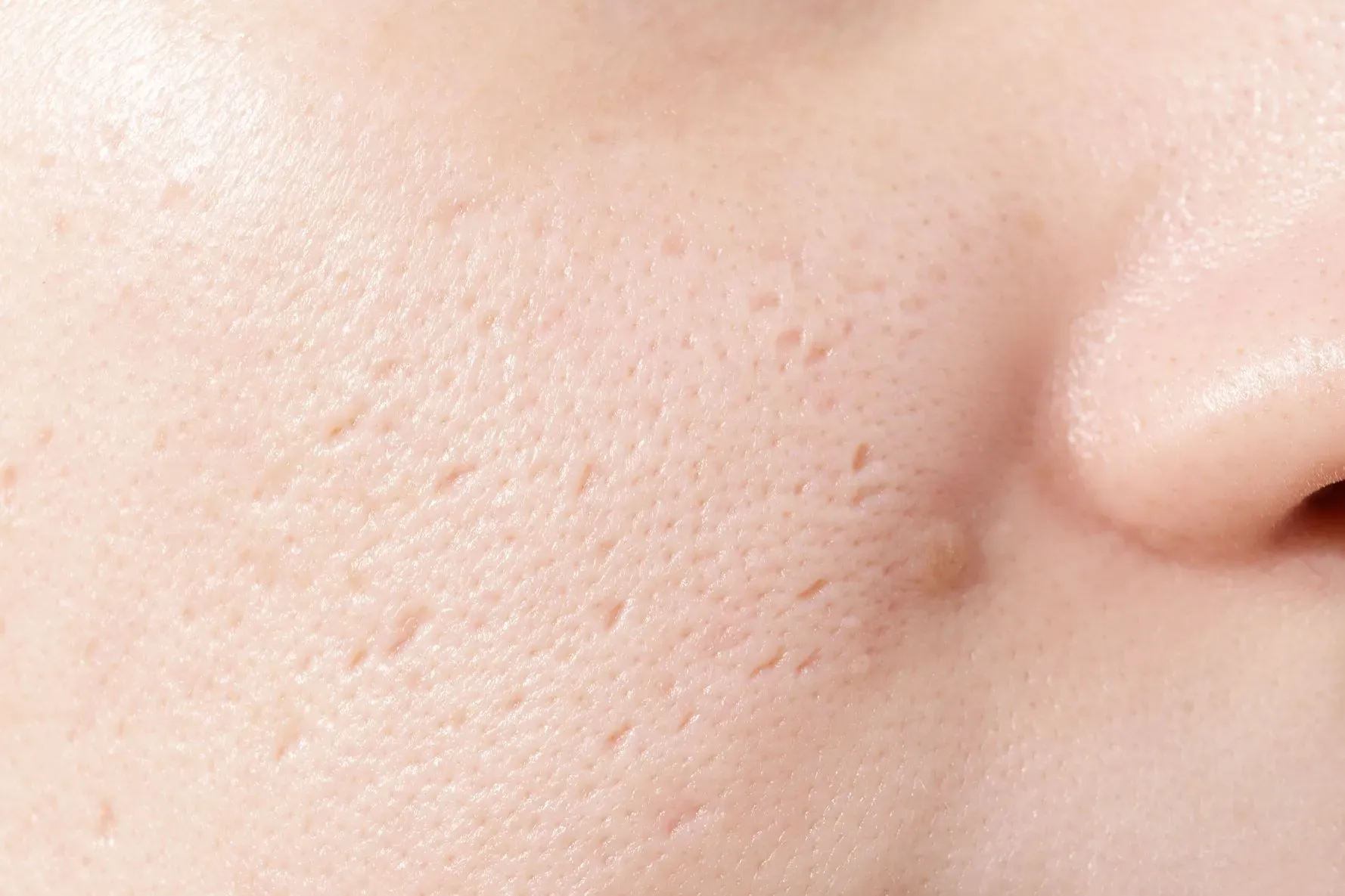
Atrophic scars (acne scars)
The key facts
|
|
|
|
|
|
What are atrophic scars?
Atrophic scars occur when insufficient new collagen is formed during wound healing. This results in depressions or indentations in the tissue – often as a result of acne, surgery or skin injuries.
Unlike hypertrophic or keloid scars, atrophic scars appear flat, thin and sunken. At our practice, we offer a wide range of proven treatment methods – from filler injections and needling to laser therapy – depending on the severity and complexion.
About the treatment
The treatment of atrophic scars, such as acne scars, requires an individual approach depending on the depth and quantity of the scars and the skin condition. The aim is to lift the sunken scar, stimulate collagen formation and improve the overall complexion of the skin.
Typical treatment options
- Hyaluronic acid or poly-L-lactic acid (Sculptra): Builds volume and stimulates collagen
- CO₂ laser: Removes superficial skin layers and promotes regeneration
- Microneedling: Stimulates wound healing through micro-injuries
- PRP (autologous blood plasma): Biologically stimulates and renews skin
When is it recommended?
- For acne scars with indentations or depressions
- After operations or skin injuries with sunken scar structure
- To improve the skin’s texture in cases of uneven skin surface
- Also possible with older scars – though the sooner, the better
"From diagnosis to surgical intervention to scar treatment—we handle everything under one roof."
FAQs
When is the right time for treatment?
Scars should ideally be tackled as early as possible. In principle, however, treatment can be carried out at any time, even after several years.
Will my health insurance company cover the treatment costs?
Generally speaking, treatment of scars for cosmetic reasons is not covered by health insurance. However, more pronounced scars with prominent contour irregularities or functionally limiting scars are sometimes covered by health insurance upon prior request.
How many treatments can be expected?
As a rule, you should expect 3 treatments at intervals of 4 to 6 weeks.

Booking options
