
CO₂ laser treatment
The key facts
|
|
|
|
|
|
What is CO₂ laser treatment?
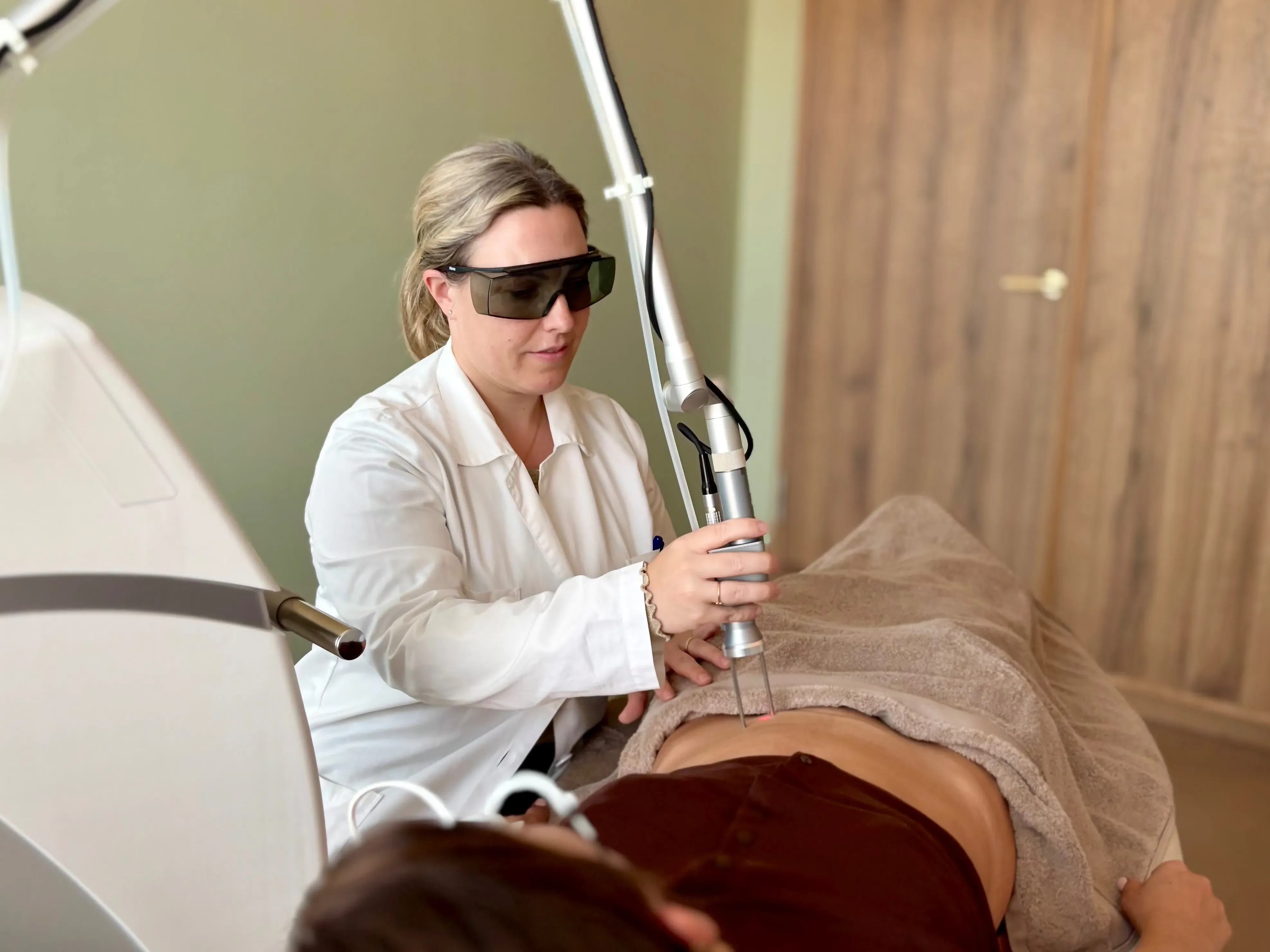
CO₂ laser treatment is an established procedure for improving scars and skin texture. This removes the top layer of skin with precision, while at the same time stimulating the deeper layers of skin to produce new collagen. The result: Smoother, finer skin and significantly reduced scarring – long-lasting and natural.
This method is particularly suitable for acne scars, surgical scars, stretch marks, and hypertrophic and atrophic scars. It can also be used specifically to prevent scarring after operations.
About the treatment
CO₂ laser treatment works by selectively removing the scarred layer of skin in a fractionated manner. At the same time, a healing process is stimulated deep down, improving the skin structure from within.
Typical areas of application
- Acne scars
- Surgical scars or post-injury scars
- Atrophic scars (sunken)
- Hypertrophic scars (raised)
- Stretch marks (striae)
- Scar prevention following recent procedures
When is it recommended?
- For clearly visible and textured scars
- If previous treatments have not had the desired effect
- For those who want smoother, more even skin
- Also possible for skin refinement without acute scarring
“Surgical precision meets state-of-the-art laser medicine: This enables us to gently optimise visible scars and refine the complexion."
FAQs
Is the treatment painful?
Depending on the intensity of the treatment, you might feel slight pain. In these cases, a local anaesthetic ointment is firstly applied to the area to be treated. Less intensive treatments (scar prevention, peels) are painless.
What do I need to bear in mind after the treatment?
After treatment, it is important to take good care of your skin. We will provide you with the appropriate products. To begin with, only these products should be used. After the check-up, we will let you know when you can switch back to your usual skincare routine.
Can I go out in the sun after the treatment?
After CO₂ laser treatment, direct sunlight should be avoided for at least 4 to 6 weeks. The skin is particularly sensitive during this time, and UV light can cause pigmentation disorders such as hyperpigmentation or hypopigmentation. Protect your skin thoroughly with a hat, clothing and – once the skin has healed – sunscreen with SPF 50 or higher. Treatments on the face or areas exposed to the sun should not be carried out during the summer months.

Booking options
