
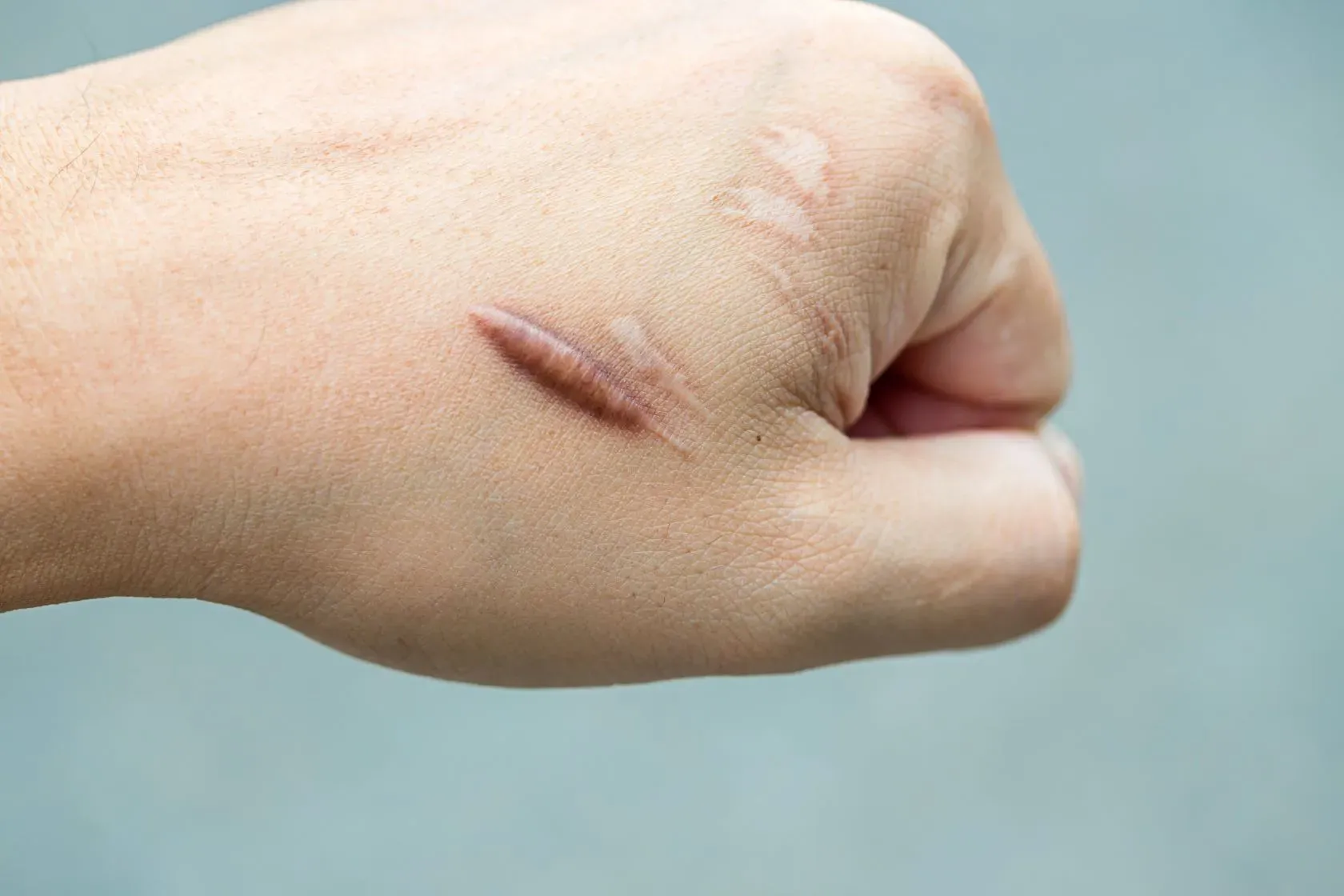
Hypertrophic scars
The key facts
|
|
|
|
|
|
What are hypertrophic scars and keloids?
Hypertrophic scars occur when the body produces excessive collagen during the healing process. They are raised, reddened and often accompanied by itching or a feeling of tightness – however, this does not extend beyond the edges of the original wound.
Keloids, on the other hand, grow beyond the original injury and are usually significantly more bulging. Both types of scars can be functionally and aesthetically distressing.
Depending on the severity of the condition, we use various methods in our practice – from cortisone injections and CO₂ lasers to corrective surgery.
About the treatment
Depending on the type, location and severity of the scar, we apply a combination of therapy concepts. Whatever the method, the goal is always the same: Flatter, softer, less visible scars – with as little effort as possible on your part.
Typical areas of application
- Post-operative scars (e.g. caesarean section, operations)
- Scars from burns or injuries
- Acne scars with a raised appearance
- Keloids after piercings, vaccinations or skin trauma
When is it recommended?
- When scars are painful, itchy or limiting
- For cosmetic improvement of prominent scars
- When conservative methods such as ointments are not enough
- For recurrence prevention following keloid removal
"From diagnosis to surgical intervention to scar treatment—we handle everything under one roof."
FAQs
Is the corrective procedure covered by health insurance?
Depending on the severity of the scar, you can ask your health insurance provider to cover the costs. Cortisone injections are usually covered by health insurance, but you will have to pay for CO₂ laser treatment and silicone ointments yourself. If the scar is very pronounced and surgical revision is necessary, a request for cost approval will be submitted to the health insurance company.
The treatment of keloids is often covered by health insurance.
How soon can I expect to see an improvement?
The treatment of hypertrophic scars requires several sessions. You may see an improvement in symptoms such as pain and itching even at an early stage. It takes a little longer for the appearance to improve, however. Treatment for keloid scars is a little more complex and lengthier.

Booking options
